
SpareRoom US
SpareRoomLifestyle
4.31.14K Reviews
- Version
- 3.1.3430
- Installs
- 500.00K
- Age Rating
- Teen
Screenshots
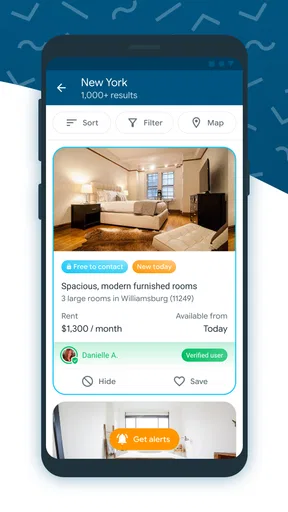
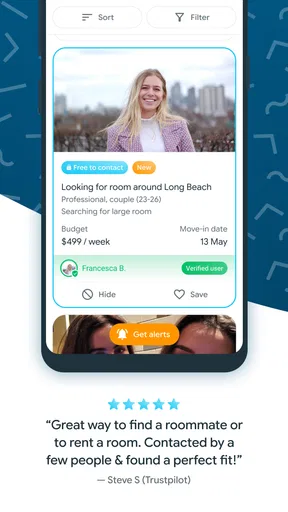
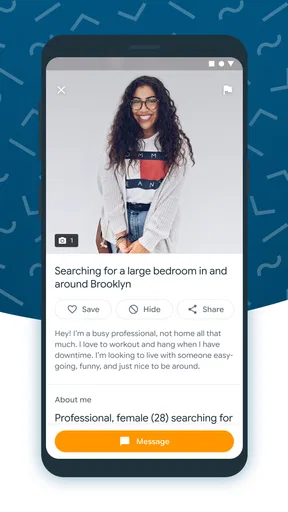
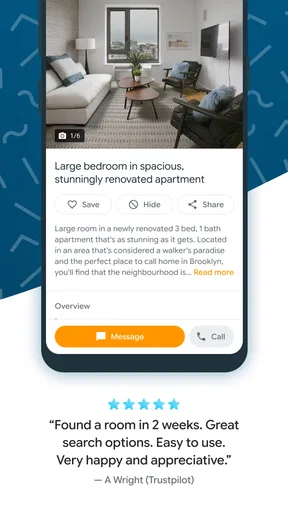
Our Review of SpareRoom US
 Analysis by Appyee
Finding a room is rarely just a matter of spotting a spare bedroom and sending a message. You are also judging location, timing, house rules, trust, budget and whether the people involved will be comfortable sharing a home. I found SpareRoom US useful because it puts that search into one focused place rather than making me jump between general classifieds, social media groups and broad property websites. It is a free lifestyle app from SpareRoom, aimed at people looking for roommates, rooms, sublets and rental properties in the United States.
My experience was strongest when I treated it as a search-and-screening tool, not as an automatic shortcut to a safe or suitable home. The app can help narrow a large housing search, but the quality of the result still depends on how carefully I read listings, ask questions and verify the arrangement before making any commitment. That balance is important: SpareRoom US improves the process of finding possibilities, but it does not replace personal judgment.
How SpareRoom US feels in its current form
The app’s purpose is immediately clear. Instead of presenting itself as a general real-estate marketplace, it concentrates on shared living and related rental searches. That focus makes a difference when my actual need is a room in an existing home, a roommate for a place I already have, or a temporary sublet rather than a full apartment search.
I like this narrower approach because it reflects how people often search in real life. Someone moving for work may not want to sign a long lease on an entire apartment. A student or newcomer may need a furnished room, a short-term option or a household that already has its routines in place. Likewise, a tenant with an empty bedroom needs a way to find a compatible person, not just a list of buildings.
The app is free to install and carries a Teen content rating, which makes it accessible to a broad audience. It has built a noticeable user base, with over 500 thousand installs, and its average rating is 4.3 from around 3 thousand ratings. Those figures suggest that it is established enough to be worth checking, although they should not be mistaken for a guarantee that every local search will be equally active.
Local activity is the first practical question I would ask before relying on it. In a large city or a place with frequent moves, a focused roommate service can feel much more useful than a general classifieds board. In a smaller market, the selection may be thinner, and I would compare results with local housing groups and conventional rental sites rather than depending on a single source.
What the search is genuinely good at
SpareRoom US is especially helpful when I already know the shape of the arrangement I want. Searching for a room in an existing home is a different task from finding a whole property, and the app’s emphasis makes those possibilities easier to think about. It is also relevant when I am open to several formats, such as a roommate arrangement, a sublet or a property rental.
One useful habit is to begin broadly, then narrow only after I understand the local supply. I might first look at rooms across a reasonable travel area, note recurring neighborhoods and compare the wording used by different advertisers. After that, I can focus on commute, move-in timing and household preferences. Starting with an extremely narrow search can hide workable options before I have learned how the market is described.
The app can also support two opposite workflows. A person searching for housing can use it to compare available rooms, while someone with space to fill can frame the home, expectations and timing for potential roommates. That two-sided purpose is more practical than a service designed only for renters, because the best match depends on both sides communicating clearly.
A realistic everyday search
Imagine I have accepted a job in another city and need somewhere to live before my first week. I would use the app to identify rooms near the office, but I would not stop at the headline price or the first attractive photograph. I would record the full monthly cost, whether the room is private, how long the arrangement lasts, what is shared, and whether the commute remains realistic at the times I actually travel.
Then I would contact several suitable advertisers with a short message that answers the questions they are likely to have about me. I would ask about the earliest move-in date, the length of the stay, deposits, utilities, visitors, cleaning and access to shared areas. If the answers are vague, inconsistent or unusually urgent, I would move on rather than trying to rescue the listing.
This workflow shows the app’s real value. It can reduce the time spent discovering possible rooms, but it cannot decide whether a household is compatible. A listing may look ideal on a phone and still be wrong because of noise, transport, work schedules or rules that were not obvious at first glance.
Where it differs from familiar alternatives
General real-estate platforms are often better when I want a complete apartment, a building search or a more traditional property-buying process. Their strength is breadth across standard rentals. SpareRoom US makes more sense when the central question is, “Who will I live with, and what room is available?” rather than simply, “Which unit can I lease?”
Social media groups may offer highly local conversations and fast-moving posts, but they can be difficult to search consistently. Posts disappear into timelines, details may be incomplete and the same room can be described differently from one group to another. A focused app gives me a more organized starting point, although I still need to apply the same caution I would use with a social post.
Classified sites can provide a wider mix of rooms and sublets, but that variety often means more noise. SpareRoom US is preferable when I want the housing search to stay centered on shared accommodation. A conventional rental site is the better choice if I do not want roommates at all, while a local community group may be better for a very short-notice arrangement where personal recommendations matter more than structured searching.
What has changed, how it affects users, and what still needs care
The app has been available since September 2016, so it is not a brand-new experiment. Its current version is 3.1.3430, and the minimum operating-system requirement is version 10. I see that as a sign of a maintained product rather than an abandoned listing, but I would still keep expectations realistic: an updated app can improve the experience without solving the difficult human parts of shared housing.
For existing users, the most important effect of ongoing development is continuity. People who have already built a search routine around the service can continue using the same focused destination for rooms, roommates, sublets and rentals. New users benefit from entering an established marketplace instead of starting with an empty or purely experimental service.
I would not interpret the current version number as proof that every part of the experience is perfect. Housing searches are sensitive to timing, location and the behavior of individual advertisers. Even a smooth app can feel disappointing if the area has few suitable listings, if messages go unanswered or if the available rooms do not match the user’s budget and schedule.
The details I would verify before contacting anyone
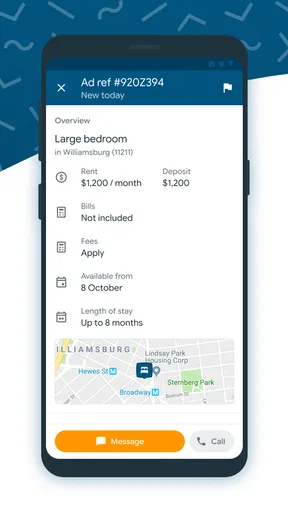
My first check would be whether the listing explains the arrangement in plain language. I want to know if I am dealing with an existing tenant, a homeowner, an agent or another type of advertiser. I would look for a clear move-in window, the expected duration, the room’s status and what costs are included. If those basics are missing, I treat the listing as a lead requiring extra questions, not as a ready-made deal.
My second check would be consistency. The description, photographs and messages should tell the same story. A room described as available immediately should not suddenly become available only after an unexplained payment. A stated monthly amount should not change when I ask about utilities or access to the property. These are simple checks, but they are more valuable than relying on a polished photo or a friendly tone.
My third check would be compatibility rather than appearance. I would ask about quiet hours, guests, pets, smoking, cleaning, shared food, work-from-home routines and bathroom use. These questions may feel overly detailed during a first conversation, yet they prevent many of the conflicts that make a room unsuitable after moving in.
A particularly useful tactic is to write down the answers. When I contact several advertisers, details blur quickly. A short comparison note covering total cost, location, house rules, contract length and the people already living there helps me avoid choosing the most attractive message instead of the most workable home.
Where the experience can become frustrating
The app cannot force advertisers to provide complete information, respond promptly or present a room accurately. That means the search may involve repeated messages, outdated options and conversations that go nowhere. I would not consider that a unique failure of this service; it is a basic difficulty of person-to-person housing searches. Still, it affects how much time I need to budget.
There is also a natural trade-off between a broad marketplace and a highly curated one. More potential listings can increase the chance of finding an unusual arrangement, but they also increase the need for filtering. If I want a fully managed rental experience with standardized applications and predictable procedures, a traditional property platform or professional letting route may suit me better.
The app includes optional in-app purchases priced from $9.99 to $199 per item. Because the basic app is free, I would begin without paying and first decide whether the local inventory and search process are useful for my situation. I would only consider an optional purchase after understanding exactly what it changes for my search and whether that benefit matters for my move-in deadline.
That point is especially important for someone under pressure. A paid option may feel tempting when a lease is ending or a new job is approaching, but urgency should not replace verification. I would never pay simply because an advertiser insists that money is needed to view a room, reserve it immediately or continue a private conversation. Any optional app purchase should be clearly separate from handing money directly to a housing contact.
Who should use it, and who should choose something else
I would recommend SpareRoom US to renters who are comfortable taking an active role in the process. It is a good fit for someone seeking a room rather than a complete apartment, someone open to living with others, or someone comparing short-term and shared arrangements. It is also useful for a person who already has a home and wants to find a roommate while describing the household on their own terms.
I would be more cautious about recommending it to someone who needs a fully regulated, hands-off rental process. If I want a property manager to handle maintenance, screening and formal leasing from start to finish, I would look at conventional rental channels. Likewise, someone who cannot tolerate uncertainty around house rules, shared facilities or changing availability may be happier renting a private unit.
People new to a city can gain a lot from the app, but they should avoid treating a room listing as a substitute for seeing the area. I would check the route at the times I need to travel, confirm nearby services and arrange a viewing or a reliable remote alternative before making commitments. A low asking price is not a saving if the commute, safety concerns or household conditions make the arrangement unsustainable.
Questions I would answer before making a decision
Is it suitable for a short-term search? It can be, especially because the service covers sublets as well as ordinary room arrangements, but I would read the duration and notice expectations carefully. Short-term housing often has different practical conditions from a standard shared lease, so I would ask who controls the agreement and what happens when the stated period ends.
Can it replace a normal apartment-rental app? Not for every user. Its focus is shared housing and related rental possibilities, which is precisely why it can be more relevant for a roommate search. If I want an entire apartment in a managed building, I would use a broader rental service alongside it rather than expecting this app to cover every property type equally well.
How should I judge whether a listing is trustworthy? I would look for consistent details, ask direct questions, compare the answers with the original description and avoid pressure to send money before I understand the arrangement. I would also verify who has the right to offer the room and make sure any agreement is written clearly. The app helps me discover contacts; it does not make those checks on my behalf.
Is the free version enough to begin? For me, yes. I would use the free starting point to test the quality of local results, learn how quickly advertisers respond and decide whether the search fits my needs. Only then would I examine any optional purchase, keeping the cost in proportion to the likely benefit and my actual deadline.
What I would like to see going forward
As I continue watching the app, I would pay attention to how clearly it helps users distinguish current, complete listings from leads that need more investigation. Better clarity around costs, availability and household expectations would have a direct effect on the time spent messaging. I would also value any improvement that helps people compare rooms without encouraging them to judge solely by photographs.
I would watch the balance between discoverability and clutter. A marketplace needs enough activity to be useful, but too many incomplete or poorly explained posts can make the strongest options harder to identify. The best future direction would preserve the app’s shared-housing focus while making the practical differences between room types, sublets and property rentals easier to understand.
For current users, the sensible approach is to update when needed, keep a personal record of important conversations and avoid assuming that a newer version removes the need for caution. Product improvements can make searching more convenient; they cannot guarantee compatibility between strangers or eliminate the risks of moving money and signing agreements.
My final take after using the app
SpareRoom US is a focused tool for a very specific housing problem: finding or offering shared accommodation in the United States. I appreciate that it does not force a roommate search into the shape of a conventional apartment hunt. That makes it more relevant than broad rental apps when I need a room, a sublet or a person to share an existing home.
Its limitations are equally clear. Results depend heavily on the city, the timing and the quality of individual listings. I still need to ask uncomfortable questions, compare total costs, confirm the arrangement and protect myself from pressure. Anyone expecting the app to deliver a verified home with no personal work will probably be disappointed.
My recommendation is to install it as one part of a housing search, especially if shared living is genuinely on the table. Start free, search wider than one neighborhood, keep notes, and treat every promising listing as something to investigate rather than something already secured. For renters willing to do that careful second stage, SpareRoom US is a practical and relevant option; for people seeking a fully managed private rental, a traditional property service is likely the better match.
Verdict
Strengths of SpareRoom US
- Large selection of rooms and roommates across major US cities.
- Detailed profiles help compare prices, locations, and household preferences.
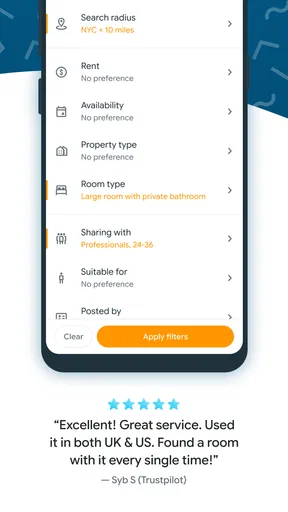
- Useful search filters narrow results by budget, move-in date, and amenities.
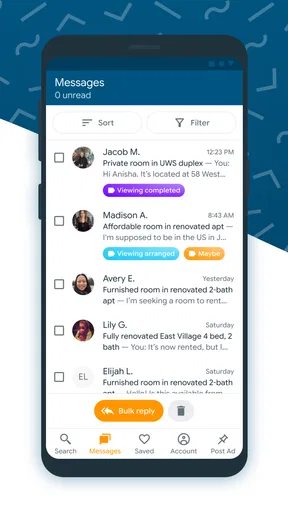
- Direct messaging makes it easy to contact potential roommates quickly.
- Room listings often include photos, descriptions, and availability details.
Limitations of SpareRoom US
- Some listings may be outdated or receive no response from the poster.
- Popular rooms can attract many applicants and disappear quickly.
- The app cannot guarantee the accuracy or safety of every listing.
- Premium features may be needed for greater visibility or extra access.
- Search results can vary significantly depending on the city and neighborhood.
Similar Picks in This Category
View All
SmartThings
Samsung Electronics Co., Ltd.4.6

Google Home
Google LLC4.0

Pinterest4.2

Astrotalk - Talk to Astrologer
Astrology & Horoscope4.7

My Verizon
Verizon Consumer Group4.5

Samsung Wallet (Samsung Pay)
Samsung Electronics Co., Ltd.4.1
Frequently Asked Questions
What is SpareRoom US, and how does it work?
SpareRoom US is a roommate and room-rental platform designed to help people find available rooms, roommates, and shared homes across the United States. After creating a profile, you can search by location, price, move-in date, and preferences, then contact advertisers directly. Listings may come from private landlords, existing tenants, or people searching for roommates, so reviewing each post carefully is important.
Is SpareRoom US free to use?
SpareRoom US offers free access to many essential features, including browsing listings and responding to some advertisements. However, certain optional tools or promotional features may require payment, and availability can vary depending on the listing or account type. Before subscribing or purchasing an upgrade, check the current pricing, renewal terms, and exactly what benefits are included in the app.
How can I stay safe when using SpareRoom US?
Use SpareRoom US as a starting point for communication, but always verify the person and property independently before making a commitment. Avoid sending deposits or personal documents before viewing the room and confirming the agreement. Meet in a safe place, tell someone where you are going, watch for unusually cheap listings, and be cautious of users who pressure you to pay through unusual methods.
Can I find short-term rooms or furnished accommodation on SpareRoom US?
Yes, SpareRoom US can be useful for people looking for different types of arrangements, including furnished rooms, temporary stays, and longer-term shared accommodation. The options depend heavily on the city, neighborhood, budget, and current availability. Read the full description for lease length, deposit requirements, included bills, house rules, and whether the advertiser accepts short-term tenants.
What information should I include in my SpareRoom US profile?
A complete and honest profile can improve your chances of receiving suitable responses. Include your preferred location, budget, expected move-in date, desired rental period, work or study situation, and relevant lifestyle details such as smoking, pets, or preferred household atmosphere. Avoid publishing sensitive information, and use your messages to clarify compatibility before arranging a viewing.
